Capture
You send conductor, gauge, core count, connector, jacket, shield, length, quantity, destination, and timing. Missing pinout stops the outward send.
HOW THE DESK WORKS
LinkScope Sourcing 28 helps a business buyer turn a harness drawing into a packet that more than one factory can price. The path is requirement, factory questions, then a side-by-side reading of replies. The desk is an independent sourcing partner. It does not own a harness plant and it does not claim an authorized-distributor relationship with any connector house.
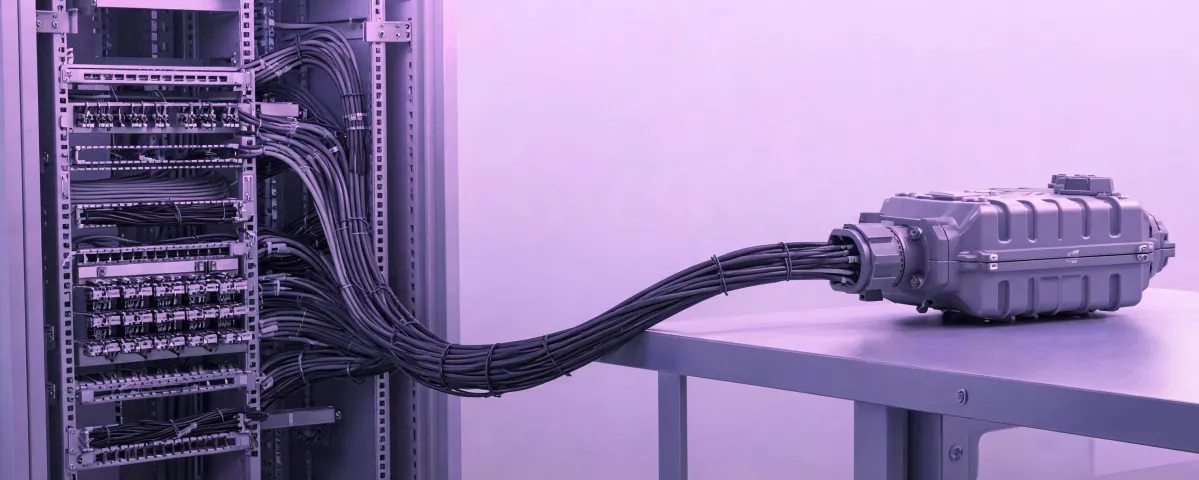
You send conductor, gauge, core count, connector, jacket, shield, length, quantity, destination, and timing. Missing pinout stops the outward send.
The desk asks factories that can discuss that construction. A match is a willingness to quote the revision, not a pre-approved vendor list.
Replies are lined up on currency, Incoterm, test labor, and exclusions. A cheaper-looking line that drops the boot is not aligned, so it is not ranked as the same buy.
You accept, reject, or ask for a deviation in writing. The desk does not place the purchase order and does not certify the crimp.
Factory history, headcount, and press counts stay off this site unless a supplier puts them in a quotation you asked for. There is no customer score and no savings percentage published here. If a sourcing-support notice mentions a ceiling, read that notice for the eligibility wording. It is not a harness discount.
Workmanship class is a buyer choice. Class 2 and Class 3 in IPC/WHMA-A-620 change what a visual inspection is asked to catch. Say which class the drawing invokes. The desk will not invent a class to make two quotes look alike. Temperature range is similar: if the outdoor tail must be discussed at -40 C to 105 C, write that as a question for the jacket and the housing, and wait for the datasheet that actually states it.
Numeric cells the desk will not invent include 18 AWG versus 22 AWG, a 16-core bundle versus an 8-core bundle, IP67 discussed as 1 m for 30 minutes, a hipot row at 500 VDC or 1000 VDC, and a pull sample billed apart from the unit. An ingress-protection code applies to the connector after it is mated, not to an open shell on a tower. Connector mating cycle stays on the housing datasheet. Impedance, insertion loss, return loss, VSWR, wavelength, and optical budget stay on the coax or fiber leg that actually exists. Frequency range, gain, dispersion, receiver sensitivity, and transmit power stay on the host. Power over Ethernet wattage stays on the powered pairs. Calibration traceability of the test meter is a lab question, not a site claim. An OEM drawing keeps pinout under your revision and can narrow who will quote; a compatible factory proposal can add respondents and can also change gauge or plating, so name which side you want priced.
No. Inquiry cards are labels. Assemblies, if any, ship from the factory that accepts the order you place with them.
No. Ask the supplier for the quality-system document you need, such as a current ISO 9001 certificate if that is your rule, tied to the site that would build the lot.
No. The desk can point at mismatched rows. The commercial choice stays with your procurement team.
Send the drawing notes, the quantity, the destination, and the tests you want priced. The form below is the same field set as the short dialog, placed here so the steps stay visible while you write.
QUALIFIED BUSINESS BUYERS
Compare quotations from up to 3 factories after the harness construction is written down.
Eligibility applies to qualified business buyers and is confirmed after we review your product, quantity, destination, and sourcing requirements.